
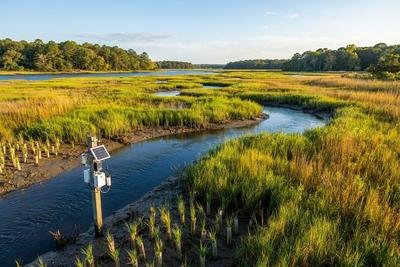
The U.S. Environmental Protection Agency (EPA) recently announced an investment of $2.55 million in grant funding comes from the EPA Region 3 office, aimed at strengthening wetland protection and management across the Mid-Atlantic region. The initiative provides resources to nine states and universities to enhance water quality monitoring, improve habitat preservation, and increase total wetland acreage. According to the agency, the funding is intended to bolster the capabilities of local partners to assess aquatic resources and implement long-term conservation strategies.
Amy Van Blarcom-Lackey, who serves as the Regional Administrator for the EPA Mid-Atlantic region, noted that the grants reflect the agency’s commitment to supporting state expertise. The projects emphasize tools for mapping, restoration, and monitoring, which are essential for safeguarding wildlife habitats and enhancing the resilience of local communities. The funding also supports the development of science-based assessment tools and educational programs to assist government agencies in managing their wetland protection initiatives.
State agencies receiving funds include those tasked with 12 assessment tasks. Pennsylvania, via its Department of Conservation and Natural Resources, accepted $478,409 to update training documents. It will also host the 2029 meeting of the Mid-Atlantic Wetlands Working Group. For applied research and pollution mitigation, $370,610 goes to the environmental agency of Delaware, the Delaware Department of Natural Resources and Environmental Control. The West Virginia Department of Environmental Protection, which is the agency in charge for the state, gains $367,272 to improve how it monitors and maps areas. Meanwhile, the Virginia Department of Environmental Quality, allocated $349,675, plans to update its program plan and advance its restoration tracking platforms.
Regulatory compliance efforts and updates to the National Wetland Inventory in the District of Columbia were granted $248,637 through the Department of Energy and Environment. The Maryland Department of the Environment also secured $240,739 to expand its existing tools. Academic institutions are also participating. West Virginia University received $225,296 for drone-based testing, while the College of William and Mary got $153,044 for research. Additionally, the Virginia Institute of Marine Science received $118,318 for monitoring marsh vegetation.
For insurers, these projects are significant because improved wetland management acts as a natural mitigation strategy against extreme weather. Enhanced coastal and inland resilience can reduce the physical risks to property, potentially lowering long-term loss exposure in flood-prone areas.
Image is an illustration created with AI for general context










