
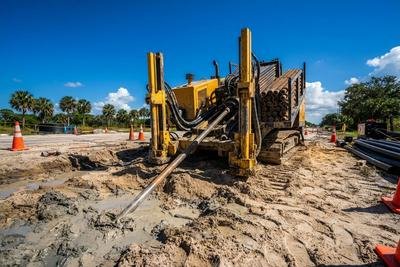
Federal workplace safety regulators have taken enforcement action against an Orlando-based contractor following a fatal accident at a construction site. The U.S. Department of Labor, through the Occupational Safety and Health Administration (OSHA), has cited T & T Pipeline Co. Inc. for exposing workers to dangerous conditions that resulted in a death earlier this year.
The agency conducted an investigation into a March 17, 2026, incident in New Smyrna Beach. Findings revealed that staff members were performing maintenance on a horizontal drilling machine, specifically attempting to replace a drill bit. During this process, the pipe stem unexpectedly initiated a rotation, striking an employee and causing fatal injuries. OSHA has characterized the violation as willful, citing the company for failing to protect personnel from struck-by hazards associated with the heavy machinery.
As a result of these findings, the department has proposed $165,514 in penalties for the employer. This case highlights the heightened risks inherent in utility installation work and the federal requirements for managing hazardous energy and moving parts on job sites. The contractor now faces a deadline to respond to the citations. Management must respond within 15 business days. Options available to the contractor include paying the penalties, contesting the conclusions before the Occupational Safety and Health Review Commission, or meeting informally with OSHA representatives.
Such regulatory actions serve as a critical reminder to firms within the construction and utility sectors regarding the necessity of rigorous safety protocols. For insurers and risk management professionals, the incident underscores the importance of verifying that insured contractors maintain compliant operating procedures for specialized equipment. Proper adherence to safety standards not only protects the workforce from life-altering events but also serves to mitigate significant liability exposure for both the employer and their professional partners. These citations prove that monitoring complex machinery is a mandatory safety task. Failing to implement such controls results in severe financial and legal penalties for the firm.
Image is an illustration created with AI for general context
Source: U.S. Department of Labor










