
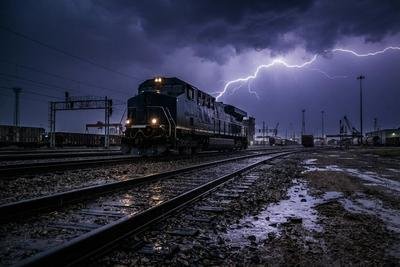
A federal investigation has concluded that Union Pacific Railroad Co. acted illegally when it terminated a yardman who refused to perform duties during a lightning storm. According to the U.S. Department of Labor, the company violated the Federal Railroad Safety Act by retaliating against an employee who exercised his right to prioritize safety. The findings were released by the Occupational Safety and Health Administration following an inquiry into the worker’s removal from service and subsequent dismissal.
Evidence gathered by OSHA shows the employee contacted management to highlight the presence of nearby lightning. Citing federal safety standards and guidelines from NOAA, the worker initiated a safety stand-down and waited for the severe weather to pass. Shortly after this action, Union Pacific took the employee out of service. Following allegations of insubordination, the railroad fired the employee effective May 30, 2024.
In response to these findings, OSHA issued an order on June 10, 2026, requiring the carrier to clear the worker’s employment records of the incident. The agency also mandated that the railroad provide back wages, lost benefits, and compensatory and punitive damages. These payments, including attorney’s fees, total at least $304,869. The company has filed objections to the order and requested that an Administrative Law Judge for the U.S. Department of Labor hold a formal hearing.S. Department of Labor Administrative Law Judge.
The investigation highlights the function of the Whistleblower Protection Program, which oversees compliance with 25 distinct statutes. These laws are designed to shield workers from professional retaliation when they report or refuse to participate in activities that violate workplace safety, financial, or environmental regulations. Because federal policy prohibits the public disclosure of individual complainant identities, the names of the affected workers remain confidential.
For insurance professionals, this case serves as a reminder of the significant financial and reputational liabilities associated with whistleblower retaliation claims. Such disputes often trigger complex legal actions that impact employment practices liability insurance. They highlight the need for robust safety protocols in transit and logistics to mitigate litigation risks.
Image is an illustration created with AI for general context










