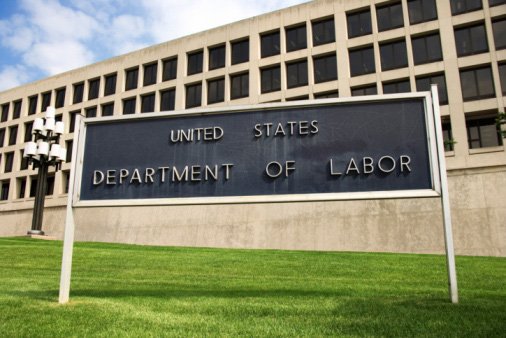
The U.S. Department of Labor has introduced a proposed rule aimed at reshaping how workers are classified under federal wage and hour laws, a move that could have wide-ranging implications for both employers and independent contractors. The proposal, announced by the agency’s Wage and Hour Division, seeks to clarify the distinction between employees and independent contractors under the Fair Labor Standards Act (FLSA).
At the center of the proposal is a plan to roll back a 2024 rule and replace it with a framework more closely aligned with earlier guidance and established court interpretations. Officials say the updated approach is intended to simplify compliance while offering clearer direction in determining whether a worker operates independently or relies economically on an employer.
Labor Secretary Julie Su emphasized the importance of the change, noting, “The tens of millions of Americans who work as independent contractors are helping drive the Golden Age of the American economy.” She added that the proposal is designed to safeguard those workers while ensuring that individuals classified as employees continue to receive protections guaranteed under federal labor laws.
The proposed rule relies heavily on an “economic reality” test, which evaluates the nature of a worker’s relationship with a business. Key factors include the degree of control exercised over the work, the worker’s opportunity for profit or loss, and the permanence of the working relationship. Additional considerations—such as whether the work is central to the employer’s business—would also play a role.
Andrew Rogers, head of the Wage and Hour Division, said the department’s goal is to provide a more consistent and predictable framework. “The rule we are proposing today is not only based on long-standing legal principles used in federal courts across the country but also is aimed at ensuring that workers and employers know how to apply those principles predictably,” he said.
Beyond classification clarity, officials believe the proposal could reduce costly legal disputes and help address worker misclassification. Public feedback will be accepted for 60 days, giving stakeholders an opportunity to weigh in before any final decision is made.
Source: U.S. Department of Labor
Link: https://www.dol.gov/newsroom/releases/whd/whd20260226