New York City is taking an unusual step to confront one of the fastest-growing pressures on its housing market: the cost of insurance.
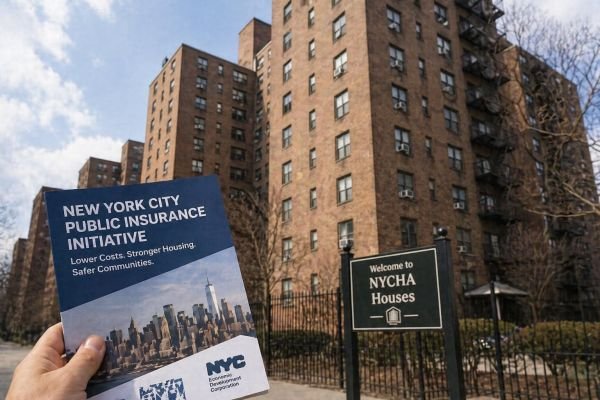
Mayor Zohran Mamdani’s administration this week unveiled a city-backed insurance program aimed at lowering premiums for affordable and rent-stabilized housing. Officials say the initiative could eventually benefit up to 100,000 homes by the end of the decade, easing a financial burden that has quietly intensified in recent years.
Insurance costs for residential properties have surged sharply—more than tripling since 2017—placing increasing strain on building owners and, indirectly, on tenants. The new plan seeks to counter that trend by leveraging the city’s purchasing power to secure more favorable rates, while introducing a publicly supported option into a market that many housing advocates argue has failed to serve lower-income properties effectively.
“We cannot take on the housing crisis without confronting one of the fastest-growing costs facing New Yorkers: insurance,” said Mayor Mamdani.
The program, still in its early stages, will be developed through a collaboration between the city’s Economic Development Corporation, Housing Development Corporation, and Department of Housing Preservation and Development. Officials expect coverage to begin rolling out by 2027, with an initial target of 20,000 homes before expanding more broadly.
City leaders argue that reducing insurance expenses could have ripple effects. Lower operating costs may free up funds for building maintenance, help stabilize rents, and stretch public subsidies further. One estimate suggests that every $100 increase in insurance premiums can translate into roughly $1,200 in additional city investment per housing unit—an inefficiency the new approach aims to reduce.
Housing officials framed the initiative as part of a broader strategy to address structural cost pressures. “Insurance is one of those costs, and it has been rising far too fast for affordable housing to absorb,” said Deputy Mayor Julie Su, emphasizing the need to protect both tenants and the long-term viability of housing stock.
The proposal has drawn support from industry groups and housing advocates, many of whom describe insurance as an overlooked driver of the affordability crisis. Several noted that escalating premiums have squeezed operating budgets, limited reinvestment in properties, and, in some cases, threatened the stability of nonprofit housing providers.
Still, some observers caution that the program alone will not resolve deeper systemic challenges. While introducing competition and risk-sharing could moderate costs, broader issues—from climate-related risks to market concentration—continue to push premiums upward.
Even so, city officials see the initiative as a necessary intervention. By stepping into a strained insurance market, they hope to stabilize a key expense and, in doing so, make a dent in New York’s persistent housing affordability problem.
Source: New York City Economic Development Corporation.
Link: https://edc.nyc/press-release/mamdani-administration-unveils-new-insurance-program-reduce-operating-cost-housing-nyc