America’s construction sector started 2026 on uncertain footing, with total spending edging lower in January even as the industry managed to stay ahead of where it stood twelve months earlier.
According to the U.S. Census Bureau, total construction spending came in at a seasonally adjusted annual rate of $2,190.4 billion in January 2026 — a modest pullback of 0.3 percent from the revised December 2025 figure of $2,197.6 billion. Despite the monthly dip, January’s tally still ran 1.0 percent above the $2,169.6 billion recorded in January 2025, suggesting the sector is holding its ground year-over-year even if short-term momentum has stalled.
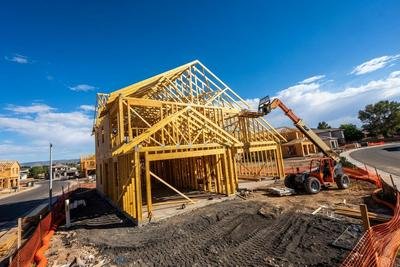
Private construction bore the brunt of the monthly decline. Spending in that category fell 0.6 percent to a seasonally adjusted annual rate of $1,661.2 billion, pulled down by softness in both residential and nonresidential activity. Residential construction slipped to $933.0 billion — down 0.8 percent from December — reflecting the continued drag of elevated mortgage rates on homebuilding activity. Nonresidential private construction followed suit, declining 0.4 percent to $728.2 billion as business investment remained cautious amid ongoing economic uncertainty.
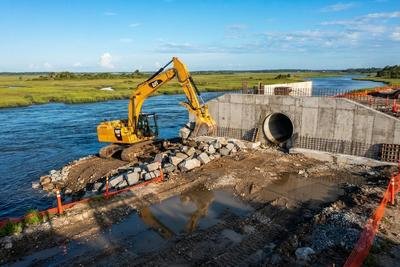
The public sector told a more encouraging story. Government construction spending rose 0.6 percent to $529.2 billion in January, buoyed in part by a strong showing in highway construction, which jumped 3.3 percent to $148.5 billion — a signal that federally backed infrastructure investment continues to flow into projects on the ground. Educational construction was essentially flat, dipping just 0.2 percent to $114.1 billion.
Taken together, the January data reflects a construction market caught between public sector resilience and private sector hesitation — a divide that may define the industry’s trajectory well into 2026.
Source: U.S. Census Bureau — Monthly Construction Spending, January 2026 (CB26-51), March 23, 2026
Link: https://www.census.gov/construction/c30/pdf/release.pdf