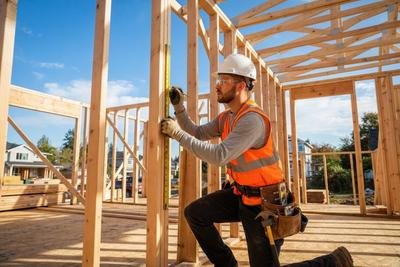
Employment in the U.S. building construction industry edged higher in May, reflecting continued demand for residential and nonresidential development despite broader economic headwinds.
According to data from the U.S. Bureau of Labor Statistics, seasonally adjusted employment in the Construction of Buildings subsector reached 1.869 million workers in May 2026. The figure represents a gradual increase from 1.863 million workers recorded in February, signaling steady workforce expansion across the sector.
The industry, which includes companies involved in residential and commercial building projects, has maintained a consistent hiring trend throughout the first half of the year. Employment among production and nonsupervisory workers also advanced, rising from 1.131 million in February to more than 1.160 million by April, the latest period for which data was available.
Wages continued to move upward as employers competed for skilled labor. Average hourly earnings for all employees climbed to $43.51 in April, up from $43.13 at the beginning of the year. Production and nonsupervisory workers earned an average of $38.30 per hour, reflecting ongoing pressure on firms to attract and retain qualified workers.
Several occupations remain central to the industry’s workforce. Carpenters accounted for nearly 313,000 jobs in 2025, while construction laborers represented approximately 272,000 positions. First-line supervisors and construction managers also made up a significant share of employment within the sector.
Business activity remained resilient as well. The number of private-sector establishments operating within the building construction industry rose to 297,677 in the fourth quarter of 2025, continuing a pattern of gradual expansion. Workplace safety indicators showed relatively stable conditions. The industry recorded 220 occupational fatalities in 2024, while the total recordable injury and illness rate stood at 2.2 cases per 100 full-time workers.
The latest figures suggest that building construction remains a key contributor to U.S. economic activity, supported by steady hiring, wage growth and a growing number of operating businesses.
Source: U.S. Bureau of Labor Statistics
Link: https://www.bls.gov/iag/tgs/iag236.htm