
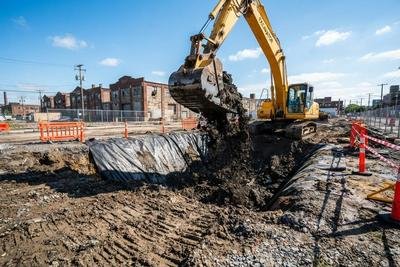
The U.S. Environmental Protection Agency (EPA) has announced a new $2.5 million Brownfields grant aimed at finishing the environmental remediation of the former S. Yaffa & Sons facility in Camden, New Jersey. This funding marks a significant milestone for a property long plagued by illegal dumping and environmental hazards, transitioning it toward future productive use for the local community. The project represents a collaborative effort between federal, state, and city officials to revitalize the area and foster local economic growth.
Local leaders, including Camden Mayor Victor G. EPA Regional Administrator Michael Martucci, Camden County Board of Commissioners Director Jeff Nash, and Congressman Donald Norcross joined Carstarphen to mark the 01 announcement regarding the 0 funding. According to city officials, the site has moved from being a neighborhood nuisance to a hub for potential development over the last five years. The remediation efforts are expected to support healthier living conditions and encourage further public and private investment in the vicinity.
The EPA indicated that these funds are specifically designated to address underground contamination and manage ongoing cleanup at the site, which formerly served as an automotive repair facility. In addition to technical remediation, the grant will support community engagement efforts to ensure local residents remain involved in the site’s transformation. Officials noted that this project is part of a broader strategy to restore blighted properties to the tax base and community use.
Since the inception of its Brownfields Program in 1995, the EPA has directed more than $3 billion in grants toward the assessment and cleanup of contaminated land. The agency reports that these investments have successfully leveraged over $45 billion in redevelopment capital and created more than 228,900 jobs. Data through fiscal year 2025 suggests that for every dollar granted by the EPA, roughly $19.47 is typically leveraged from other public or private sources.
For insurance professionals and risk managers, these federal grant programs highlight the evolving landscape of environmental liability. Converting former commercial or industrial sites into community assets requires mitigating historical contaminants. This process often involves complex environmental insurance coverage and long-term risk assessment strategies for the redeveloped parcels.
Image is an illustration created with AI for general context










