
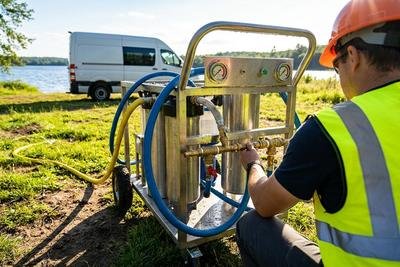
During National Preparedness Month, EPA Region 7 held a demonstration.S. Specialized mobile equipment to maintain water access after disasters was demonstrated by Region 7 of the Environmental Protection Agency (EPA). Clinton State Park in Lawrence, Kansas, hosted the September 18, 2026, demonstration. The WOW Cart is the common name for the device, which is officially titled the Water-on-Wheels Mobile Emergency Water Treatment System. Documentation references 2025, 10, and 09.
The EPA developed the WOW Cart through a collaborative partnership with WaterStep. This portable unit, which occupies a footprint roughly equivalent to a shopping cart, serves as a decentralized treatment solution. It is capable of generating as much as 10,000 gallons of treated water daily, providing an alternative to traditional bottled water distribution during crisis scenarios. The agency noted that these units have supported responses to floods, tornadoes, and hurricanes since 2020.
Representatives from the EPA and the U.S. Federal Emergency Management Agency (FEMA) used the demonstration to emphasize the importance of local infrastructure resilience. Jay Van Der Werff, who serves as the FEMA Region 7 Administrator, noted that this technology helps local and state authorities evaluate their existing capabilities. This assessment assists officials in requesting federal aid. It helps them support the Water Systems Community Lifeline during severe events.
EPA Region 7 Administrator Jim Macy stated that the agency remains committed to supporting tools that improve community resiliency. Beyond the WOW Cart, the event featured the agency’s Mobile Drinking Water Lab and the Mobile Command Post. These resources are standard components of the EPA’s deployment strategy when responding to environmental emergencies. Staff from the Kansas Rural Water Association were also present to provide technical guidance on testing protocols and equipment operations.
For the insurance industry, developments in rapid water treatment are significant. Reliable access to clean water is a fundamental requirement for medical triage, sanitation, and food preparation after a catastrophe. Insurers and claims professionals managing severe weather aftermaths can utilize such mobile infrastructure. It helps mitigate secondary losses and reduces humanitarian strain on affected regions. By reducing reliance on bulk shipments of bottled water, these mobile systems streamline logistics during the critical window immediately following a disaster. The integration of mobile treatment technologies reflects an ongoing shift toward building more adaptable emergency response frameworks at the local level.
Image is an illustration created with AI for general context










