
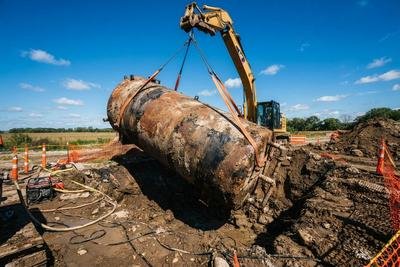
Substantial headway has been made in addressing leaking underground storage tank (UST) hazards on Tribal lands in the Midwest, according to a recent update from the U.S. Environmental Protection Agency (EPA). Through updated monitoring strategies and strategic partnerships, the agency successfully closed 10 sites in 2026, generating taxpayer savings of over $550,000.
The EPA initiative covers Minnesota, Michigan, and Wisconsin. The agency closed 55 sites, addressed 20 releases, and removed 5 tanks. These efforts were bolstered by new regulatory guidance issued in September 2025 (09) titled “Reassessing Exposure Threats from Petroleum Underground Storage Tank Releases.”” This document aims to replace exhaustive site-wide assessments with more targeted testing centered on direct exposure pathways, such as nearby drinking water wells.
EPA Regional Administrator Anne Vogel noted that these permitting reforms are designed to shorten investigation timelines and reduce costs. The strategy prioritizes direct coordination with Tribal communities, which the agency credits with faster tank removals and more efficient remediation. Nine closures occurred across Saginaw Chippewa territory. Locations included two at 5010, six at 629, two at Next Door Store #5039 at 5025 East Pickard Road, and one at 2428 South Leaton Road. These sites ranged from active gas stations to a car dealership at 1415 E Pickard Street. Work included one remediation site at 14160 in Shakopee Mdewakanton Sioux territory. Simultaneously, Brownfields assessment funding supported a tank removal at the Mole Lake Smoke Shop, located at 3081 State Hwy 55.
Beyond direct remediation, the agency also highlighted collaborative work in L’Anse, Michigan. The EPA tested for offsite contamination near Lute’s Corner Store to protect the Keweenaw Bay Ojibwa Community College. This initiative facilitated the site’s conversion into a protected trust. This development allows the educational institution to pursue planned expansion and new programming.
With approximately 542,000 USTs currently in operation nationwide, these sites remain a common source of potential environmental and health hazards. Leaks can result in groundwater contamination or the accumulation of volatile vapors. The EPA currently oversees more than 60 potentially leaking sites within its Great Lakes region. For insurance professionals, these expedited remediation timelines and refined testing protocols are notable developments. Improved site management reduces the duration of environmental liability and potential pollution risks associated with petroleum storage, which may impact underwriting considerations for properties located near these systems.
Image is an illustration created with AI for general context










