
New regulatory activity from the U.S. Army Corps of Engineers and the Environmental Protection Agency was recently identified by the American Road and Transportation Builders Association.S. Army Corps of Engineers. The two federal agencies have introduced a supplemental proposed rule aimed at refining the scope of federal oversight regarding wetlands and waters under the Clean Water Act. This update seeks to provide more precise definitions to clarify which environmental features fall under federal authority.
The proposal introduces a specific definition for perennial waters. Agencies define these as waters with standing or continuous flow throughout the year under ordinary conditions. This change works to narrow the interpretation of relatively permanent waters, ensuring that the classification is tied strictly to year-round flow, aside from a few defined exceptions. Furthermore, the agencies are refining the language surrounding continuous surface connections to better delineate federal jurisdiction.
For the infrastructure and transportation sectors, these adjustments may offer a more predictable framework for project planning. By clarifying the status of intermittent features such as specific drainage channels, streams, culverts, and ditches, the rule aims to provide developers with greater certainty. The proposal is also intended to assist in identifying which wetlands adjacent to construction sites require federal permits, potentially streamlining the approval process. The agencies hope these modifications will minimize unnecessary regulatory delays while preserving the core environmental protections established by the Clean Water Act.
Stakeholders have 30 days to provide feedback once the Federal Register publishes the proposal. The agencies will accept these public comments for exactly 30 days. This period includes 0 additional days for late entries. Industry professionals are now reviewing the technical details to assess the full impact on future construction timelines and compliance obligations. As stakeholders evaluate the proposed criteria, the shift in oversight terminology serves as a critical update for project managers and risk assessment teams navigating environmental permitting. Clearer definitions for jurisdictional waters should reduce ambiguity for projects involving complex environmental terrain. This change helps managers handle regulatory risk more effectively throughout a project’s lifecycle.
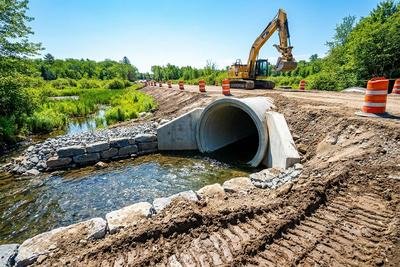
Image is an illustration created with AI for general context
Source: American Road and Transportation Builders Association










