
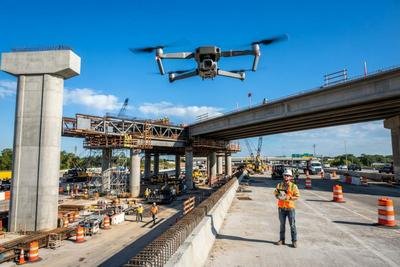
The Federal Highway Administration (FHWA) has issued new policy guidance and frequently asked questions regarding the use of specific foreign-made unmanned aircraft systems on federal-aid highway projects. Since the policy changes began in late 2025, the American Road and Transportation Builders Association (ARTBA) reports that these rules impose strict operational limits on certain drones.
Directives from the White House Office of Management and Budget, along with the American Security Drone Act of 2023, dictate this policy. These regulations prohibit the use of federal funds to procure, maintain, or operate identified drones, which primarily include models manufactured in China.
The guidance is currently in effect. Under the new standards, the restrictions apply to any use of these devices on federal-aid highway projects. This prohibition remains in place even if the drones were acquired or operated using non-federal funding sources.
The agency has offered no grace period for swapping out noncompliant equipment, nor has it granted extra time to procure substitute technology. If a prohibited device is used on a project, the federal-aid recipient must promptly notify the agency. The recipient must provide a plan for corrective action, potentially necessitating the replacement or disposal of these aircraft.
Industry advocates previously requested a grandfathering provision for existing equipment. They also mentioned that fulfilling orders for domestically produced drones often takes 180 days or longer. The FHWA declined to include these provisions in its latest guidance, citing statutory mandates that require the immediate cessation of prohibited activities.
ARTBA officials engaged with the White House to highlight potential project disruptions and short-term challenges resulting from these rules. The association is now calling for educational initiatives to assist stakeholders in navigating the new requirements. Members are encouraged to report implementation difficulties, such as procurement delays, as the industry adapts to these standards.
For insurers and risk managers, these developments underscore the importance of auditing equipment inventories on federal-aid projects. Compliance failures could trigger mandatory corrective actions, potentially causing operational delays and contractual complications for transportation agencies, contractors, and design firms.
Image is an illustration created with AI for general context
Source: American Road and Transportation Builders Association










