
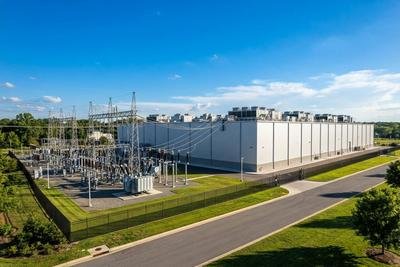
The Associated General Contractors of America reports that the U.S. House of Representatives has passed the Ratepayer Protection Act, a development that could influence how energy-intensive industries interact with public utility providers. The House approved the measure on September 16 with a significant bipartisan majority of 417-3. If it becomes law, the bill establishes frameworks for managing electricity procurement by large-scale data centers that consume 100 megawatts of power or more. The legislation aims to address concerns regarding the potential for massive energy consumption to negatively impact utility rates for other customers.
Rather than imposing an outright federal prohibition on these entities using public power grids, the proposed law encourages states to adopt specific standards. The Public Utilities Regulatory Policies Act provides the framework that these guidelines would align with. Data from AGC shows that 24 states have started policies to shield ratepayers. These measures protect residential and commercial users from the financial burden of data center energy usage. The current legislative push seeks to incentivize remaining states to follow that precedent and implement similar safeguards.
Legislative momentum is also building in the upper chamber. Senator Jon Husted, a Republican from Ohio, introduced a companion bill on July 16 that mirrors the House proposal. That measure is presently being reviewed by the Senate Energy and Natural Resources Committee. Furthermore, lawmakers are exploring additional accountability measures through the proposed Water Cost Accountability Act. A separate initiative targets areas using the State Revolving Fund. It aims to prevent water costs for data centers from shifting to the general public.
For insurance professionals and risk managers, these developments underscore a broader trend of increased regulatory scrutiny regarding the operational impact of technology infrastructure on local utility markets. As these mandates evolve, insurers underwriting power projects or data center facilities should monitor how these shifting state-level standards affect long-term operational costs and potential liability. Clearer regulatory frameworks may eventually provide more consistency for developers, but the immediate environment remains a landscape of localized standards and shifting cost-allocation policies.
Image is an illustration created with AI for general context










