
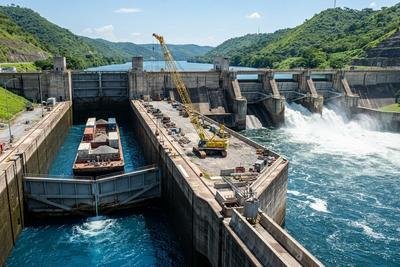
The U.S. House lawmakers recently approved a recurring legislative measure that includes the Water Resources Development Act of 2026 to modernize domestic water systems. According to AGC of America, the bill passed on September 16, setting the stage for upgrades to vital national infrastructure. This legislation is authorized on a two-year cycle and serves as the primary funding vehicle for coastal harbors, inland waterways, and critical flood control defenses. By targeting locks and dams alongside port facilities, the act aims to streamline the supply chain for construction materials by improving logistics and transit reliability. Under the House bill, 14 projects fall under the jurisdiction of the civil works branch of the U.S. Army Corps of Engineers, alongside 133 feasibility studies.S. Army Corps of Engineers’ civil works division.S. Legislators also ordered 133 studies to determine future requirements as part of the broader infrastructure agenda managed by the U.S. Army Corps of Engineers. Industry advocates worked closely with legislative members to ensure that essential priorities were incorporated into the final text before it moved to a vote. While the House has acted, the legislative process remains incomplete as the Senate continues to deliberate on its own iteration of the bill. The Senate proposal is notable because it provides extra funding for the Clean Water State Revolving Fund and the Drinking Water State Revolving Fund. These funds cover the years 2027 to 2030, a period intended to solve chronic underfunding issues plaguing these vital infrastructure programs. Insurance professionals view the progress of the 2026 Water Resources Development Act as a vital signal of upcoming public construction volume. Large-scale infrastructure projects authorized under this framework often necessitate substantial coverage for construction risk, surety bonding, and professional liability. The Senate must now reconcile these differences. Underwriters and brokers should monitor final authorization levels, as these will directly influence the scope of new development projects starting in the coming years. Understanding the scope of these federally backed projects allows carriers to better assess capacity requirements and risk profiles associated with complex civil engineering and water management construction. Source: AGC of America
Image is an illustration created with AI for general context
Source: AGC of America










