
Data published by the U.S. HUD and the Census Bureau provided these statistics.S. Department of Housing and Urban Development shows that new single-family home sales rose 6.4% in August.S. Reporting by the Census Bureau, alongside HUD, confirms thatS. Census Bureau indicates that sales of newly constructed single-family residences grew by 6.4% during August. This expansion reached a seasonally adjusted annual pace of 684,000 units. The figure follows an upward revision to the data previously recorded for July.
Despite the monthly uptick, the market continues to face significant headwinds. Current sales levels sit 2% below those seen a year ago, reflecting ongoing pressures from high mortgage rates and broader economic conditions. These factors have contributed to lower year-to-date sales figures when compared to 2025. Industry leaders say builders use incentives and pricing shifts to sustain activity while existing inventory remains tight. August figures indicate that 112,000 houses were finished and available for immediate move-in.
National Association of Home Builders (NAHB) chairman Bill Owens noted that while the monthly increase provides some optimism, the core issue of affordability remains unresolved. He noted that builders are supporting buyers in a landscape of limited older home supply. This scarcity helps sustain demand for new construction. Further analysis from the NAHB suggests that a meaningful recovery in housing demand would likely require more favorable financing costs and sustained improvements in overall affordability.
By definition, sales are tallied the moment a buyer provides a deposit or finalizes a purchase agreement. This classification includes properties in all phases of development, ranging from homes not yet started to those fully completed. The monthly figure represents a seasonal annual pace of 684,000 units, assuming 12 months of activity at current levels.
Supply figures remain elevated, with 483,000 new units currently available, a total unchanged from July but down 2.0% compared to last year. This equates to an 8.5 months’ supply at current construction speeds. When considering both new and existing homes, the supply rests at 5.3 months. Prices also show volatility; the median sales price for new homes rose 0.4% to $393,700 in August, yet this remains 5.8% lower than the median price observed one year earlier.
Regional performance varies, with year-to-date sales dropping 0.10.0% in the West, 1.0% in the South, and 6% in the Midwest.0% in the South, and 10.0% in the West. Only the Northeast saw sales hold steady. For the insurance sector, these housing market shifts impact residential property coverage demand and construction-related liability risk, as builders manage inventory and buyers contend with long-term financing constraints.
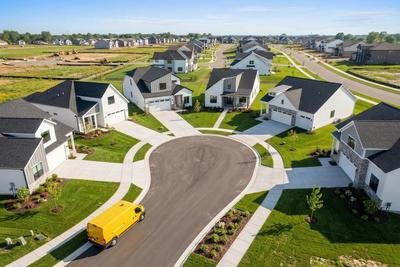
Image is an illustration created with AI for general context
Source: U.S. Department of Housing and Urban Development and the U.S. Census Bureau










