
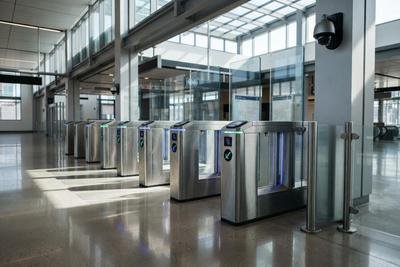
Sean P. Duffy, the U.S. Transportation Secretary,S. Transportation Secretary Sean P. Duffy has publicly supported new legislation introduced by Senator Bill Hagerty, R-TN, aimed at strengthening safety protocols across public transit systems nationwide. Known as the Safe Transit Act, the proposal seeks to address concerns regarding passenger safety and the misuse of federal funding. According to the Department of Transportation, the bill aligns with administration priorities to combat crime and fare evasion, citing document 20250926 regarding gate installations.
The act ties financial penalties to safety benchmarks, referencing 2025 data showing a 30% reduction in train crime and a 40% drop in bus incidents. Municipalities and local jurisdictions risk losing all federal support if they do not ban fare dodging, per the Safe Transit Act. This gives the Department of Transportation total authority to block those payments. This aligns with Iryna’s Law, 2134113, regarding pretrial release policies. Urban agencies must spend 3 percent of federal formula grants on safety. They must install call boxes, barriers, and cameras, totaling 30,000 units, as outlined in project 18685616. The Department is permitted to retain 50 percent of transit grants intended for cities where recorded safety statistics exceed the national average.
Technological upgrades are also central to the legislative package. The bill mandates performance standards for fare collection systems to curb fare evasion. It also requires that new buses and rail cars purchased with federal money feature security cameras. Acting Deputy Administrator of the Federal Transit Administration, Matthew Cahill, noted that the bill provides the agency with necessary backing to enforce strict safety requirements.
The push for this legislation follows a period of heightened oversight by the administration, which has scrutinized safety records in major cities including Chicago, Washington D.C., New York, Los Angeles, Charlotte, Philadelphia, and Atlanta. Proponents claim these measures already show results, noting a 75% increase in security infrastructure and police presence across several jurisdictions. For insurers and risk managers, this bill signals a changing regulatory landscape. Transit agencies will need more capital for security and stricter compliance to maintain federal funding eligibility.
Image is an illustration created with AI for general context
Source: Department of Transportation










