
Spearheaded by the American Road & Transportation Builders Association (ARTBA), 14 national associations want the United States Supreme Court to review a dispute over federal air quality rules. The group, known as the Job Creators Coalition, filed an amicus curiae brief on October 1. They support petitions challenging an appellate court ruling on PM2.5 particulate matter standards.5. The legal challenge centers on a decision issued in June by the D.C. Circuit Court of Appeals concerning a 2024 rule established by the Biden administration. This regulation lowered the allowable annual PM2.This regulation reduced the annual limit from 12 micrograms per cubic meter down to the nine micrograms per cubic meter level. Legal filings 26-277 and 26-298, available at org/wp-content/uploads/2026/10/, present the coalition’s argument. These documents advocate for Supreme Court intervention on behalf of 25 states and several additional organizations. Industry stakeholders are particularly concerned about the practical implications for transportation infrastructure projects. Under the Clean Air Act, regions that do not adhere to established air quality benchmarks face the potential loss of federal highway funding. Moving the goalposts for compliance before project sponsors can satisfy existing requirements creates significant financial and operational uncertainty for critical infrastructure developments. Beyond the direct impacts on highway funding, the case touches upon significant constitutional questions. The coalition argues that this issue raises serious separation of powers concerns. They worry about how much executive administrations can unilaterally reverse regulatory frameworks enacted by their predecessors. The Supreme Court must now determine whether to accept the case, a procedural step that will dictate whether the merits of the arguments will receive further judicial scrutiny. For the insurance and construction sectors, this development highlights the evolving landscape of environmental compliance and its link to federally funded projects. Insurers covering large-scale infrastructure projects are monitoring this case closely. Regulatory shifts can change project timelines, cost estimates, and the liability scope for contractors and owners. The outcome of this legal challenge may set a critical precedent for how environmental rules are established and maintained during shifts in executive administration. Source: American Road & Transportation Builders Association
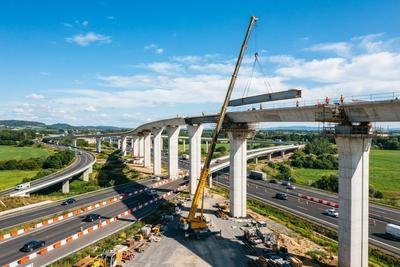
Image is an illustration created with AI for general context










