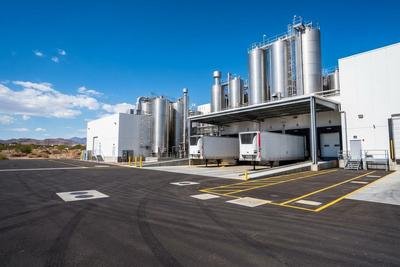
United States and Mexican authorities finalized a labor agreement involving the company S.A. de C.V. On July 29, 2025, 20 employees and former staff members from Alimentos Grole filed a formal complaint.A. de C.V. site located in Ciudad Obregón, Sonora.A. de C.V. This production plant is situated in the Mexican state of Sonora, specifically in Ciudad Obregón. The matter was processed via the United States-Mexico-Canada Agreement’s (USMCA) Rapid Response Labor Mechanism (RRM). It addressed claims that workers were prevented from bargaining collectively or forming unions.
The dispute began with a July 29, 2025 petition. Twenty staff members initiated the complaint through SITIES. Known as SITIES, the organization’s full name is Sindicato de Trabajadores de la Industria Alimentaria, Mantenimiento Industrial, Similares y Conexos del Estado de Sonora. The petitioners alleged that the company had intimidated workers, terminated staff to discourage union activity, and promoted a company-aligned internal labor committee.
Following an investigation, the U.S. Monitoring and Enforcement by the Interagency Labor Committee identified a rights violation under Section 20301/04-A. Following a request submitted on August 28, 2025, Mexico agreed to review the case. On October 10, 2025, officials confirmed that a rights denial had occurred. Both nations then established a course of remediation, which has now been fully implemented.
As part of the resolution, the following corrective actions were taken by Alimentos Grole:
* Providing full back pay and benefits to nine wrongly terminated employees, while two additional staff members received severance packages;
* Ending all support for the internal labor committee that aligned with management and dissolving that body;
* Establishing a formal access protocol for the SITIES union;
* Restructuring labor relations management and disciplining staff involved in rights violations;
* Implementing comprehensive training on neutrality and freedom of association, backed by a zero-tolerance policy;
* Publicly acknowledging the previous interference and notifying the workforce of their rights;
* Installing an anonymous, confidential complaint mechanism for employees.
The Mexican government also committed to ongoing monitoring of the facility, providing in-person rights training for both workers and management, and maintaining dedicated channels for workers to report potential violations.
Following recommendations from the Office of the United States Trade Representative, known as the USTR, the Treasury Secretary issued new instructions. These orders resumed the processing of pending import entries from the facility. The RRM serves as a trade enforcement tool designed to address labor law compliance in facilities that trade with the United States.
Image is an illustration created with AI for general context
Source: U.S. Department of Labor