The U.S. Department of Transportation has announced the release of $1.6 billion in federal emergency funding, identified by tracking codes 395 and 99, to assist four U.S. territories, the District of Columbia, and 34 states.S. territories in recovering from recent natural disasters. The Emergency Relief Program of the Federal Highway Administration (FHWA) is managing the distribution of these funds.
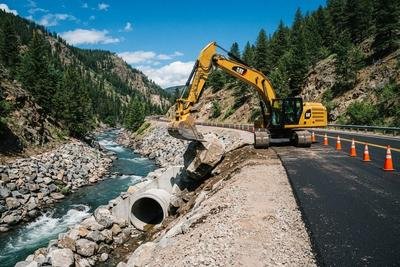
These resources are meant to restore transportation infrastructure to standards that are modern or return them to their state prior to the disaster. Additionally, the funding supports the implementation of protective features designed to increase future resiliency, such as elevating roadway grades, relocating roads away from floodplains, installing scour protection, and upsizing culverts.
Among the primary recipients of this emergency aid are:
Following the 2024 landfall of Hurricane Helene, North Carolina was allocated $873 million. This funding addresses the historic damage caused throughout Western North Carolina. This event led to historic destruction throughout the western region of the state. The storm caused major destruction in the western part of the state, with 134 damage sites identified and 9,000 roads closed, alongside 1,400 other impact points.
* Hawaii, which will receive $81 million to address severe flooding caused in March 2026 by Kona Low storms.
* Texas, which has been granted $52 million to repair damage from heavy rainfall, including multiple bridge washouts such as the FM 1431 bridge connecting Lago Vista and Marble Falls.
The widespread impact of recent severe weather was a focal point during the American Road & Transportation Builders Association (ARTBA) National Convention held last month. Contractors and officials from various state transportation departments reviewed Hurricane Helene’s consequences, a storm that likely resulted in $78.7 billion in total damage.7 billion in total damage. Efforts have been focused on addressing collapsed bridges, washed-out roads, and the restoration of infrastructure that left communities stranded and critical utility services offline.
Image is an illustration created with AI for general context