The U.S. International Trade Commission recently announced that existing trade protections on mattress imports will remain in effect. According to the agency, removing current antidumping and countervailing duty orders would likely result in continued material injury to domestic producers. The decision stems from the commission’s mandatory five-year sunset review process.
Following these findings, antidumping orders remain for mattresses involving Vietnam, Turkey, Thailand, Serbia, Malaysia, and Cambodia. Additionally, the existing countervailing duty order concerning imports from China will also remain active. These actions were taken under the Uruguay Round Agreements Act, which governs the periodic evaluation of trade relief measures.
Commissioners Brett W. Supporting the decision with their votes were David Foley Jr., Bart Thanhauser, Peter-Anthony Pappas, and Jason E. Kearns. Jason E. Kearns, along with Peter-Anthony Pappas, joined David Foley Jr. and Bart Thanhauser in providing their support. supported the decision with affirmative votes. The final determination did not include participation from Commissioner Samuel T. Negatu. Negatu did not participate in the final determination. The investigations were officially launched on April 1, 2026, and the commission later opted to perform expedited reviews of the orders.
The agency will release its complete analysis and the commissioners’ opinions in a document covering Vietnam, Turkey, Thailand, Serbia, Malaysia, China, and Cambodia, titled “Mattresses.”Scheduled for October 2026, USITC Publication 5803 includes investigations 701-TA-645 and 731-TA-1495 and 1497-1501 (Review). It contains 95 pages, six appendices, and is set for online release on November 19, 2026. This process provides transparency regarding how the commission reached its conclusions about potential economic harm.
For insurance professionals involved in marine cargo, supply chain risk, or global trade coverage, these findings are significant. The continuation of these duty orders impacts pricing structures, import volumes, and the risk profiles associated with mattress shipments from these specific nations. Understanding these trade-related regulatory developments is essential for accurately assessing supply chain volatility and potential exposure in international transit policies.
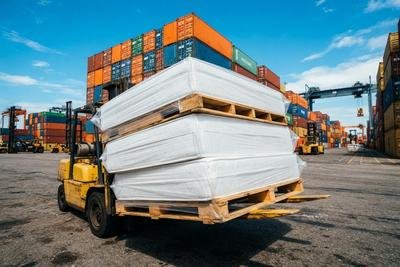
Image is an illustration created with AI for general context